
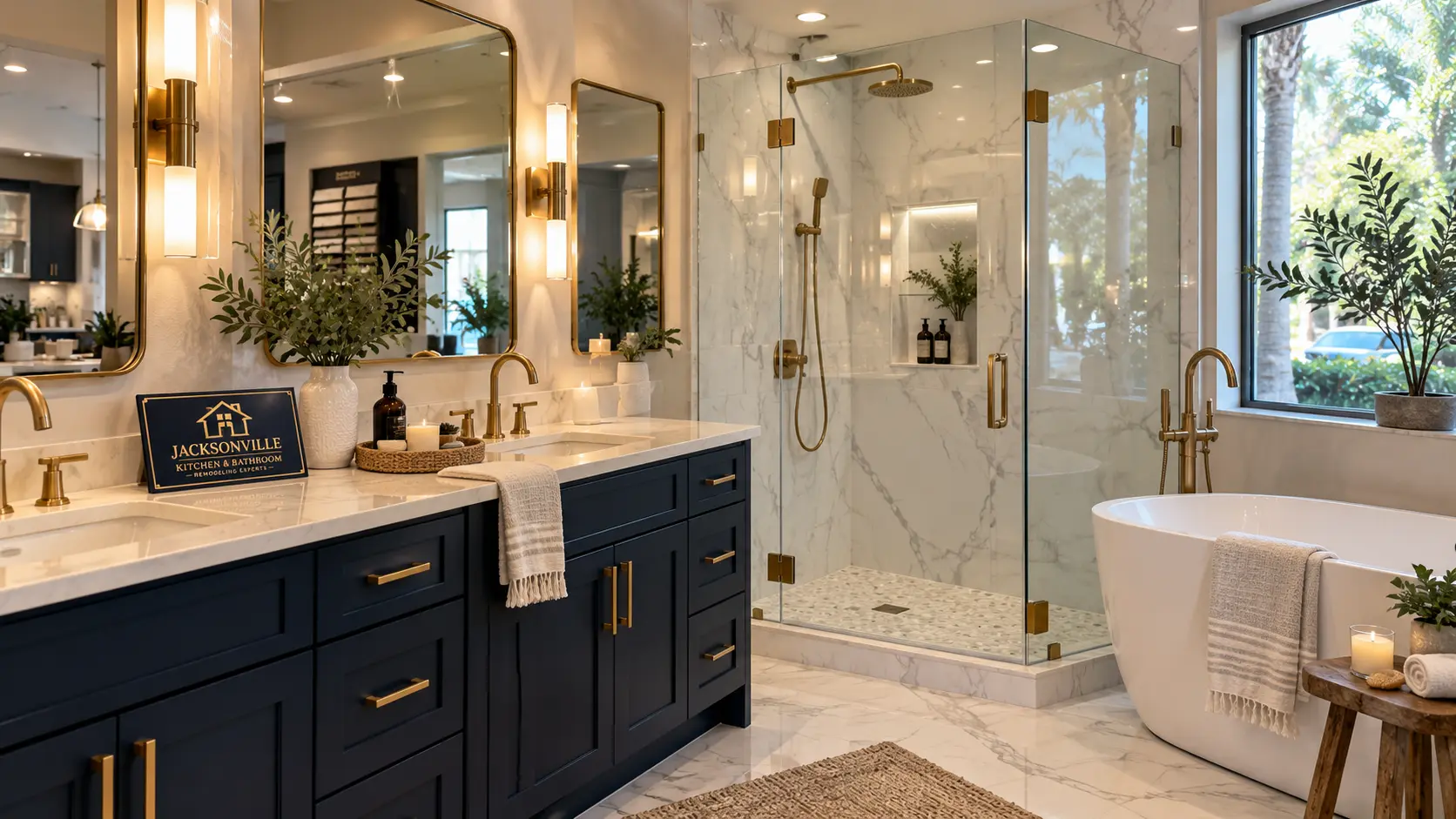
Choosing Bathroom Tile
| Tile | Where it works | Notes |
|---|---|---|
| Porcelain | Floors, shower walls and floors | Dense and low-absorption; many stone and wood looks |
| Ceramic | Walls and backsplashes | Easy to cut; wide color range |
| Mosaic | Shower floors, niches, accents | More grout lines = better traction |
| Large-format | Walls and floors | Fewer grout lines; needs flat substrates |
Layout and Grout
Planning the layout before setting tile avoids thin slivers at corners and niches. Grout color can blend for a calm look or contrast for pattern. Lighter grout shows more staining; mid-tones are forgiving. Ask about sealing needs for cement-based grout or upgraded grout options.
Waterproofing Behind the Tile
Tile and grout shed water but are not waterproof. Wet areas need a waterproof membrane, proper slope to the drain and sealed penetrations. This is especially important in walk-in showers and tub-to-shower conversions.
Tile also plays a role in kitchens — backsplashes and floors are covered on our kitchen remodeling page. For the full bath, see bathroom remodeling.
Tile FAQ
Can new tile go over old tile?
It's sometimes possible on floors in good condition, but it adds height and hides problems. In showers, we recommend removing old tile so waterproofing can be done correctly.
What's the best tile for a bathroom floor?
Porcelain is a strong choice for durability and moisture resistance. Choose a slip-resistant finish, especially near the shower.
Do I need to seal tile?
Porcelain and ceramic tile generally don't need sealing, but cement-based grout and natural stone typically benefit from it.