
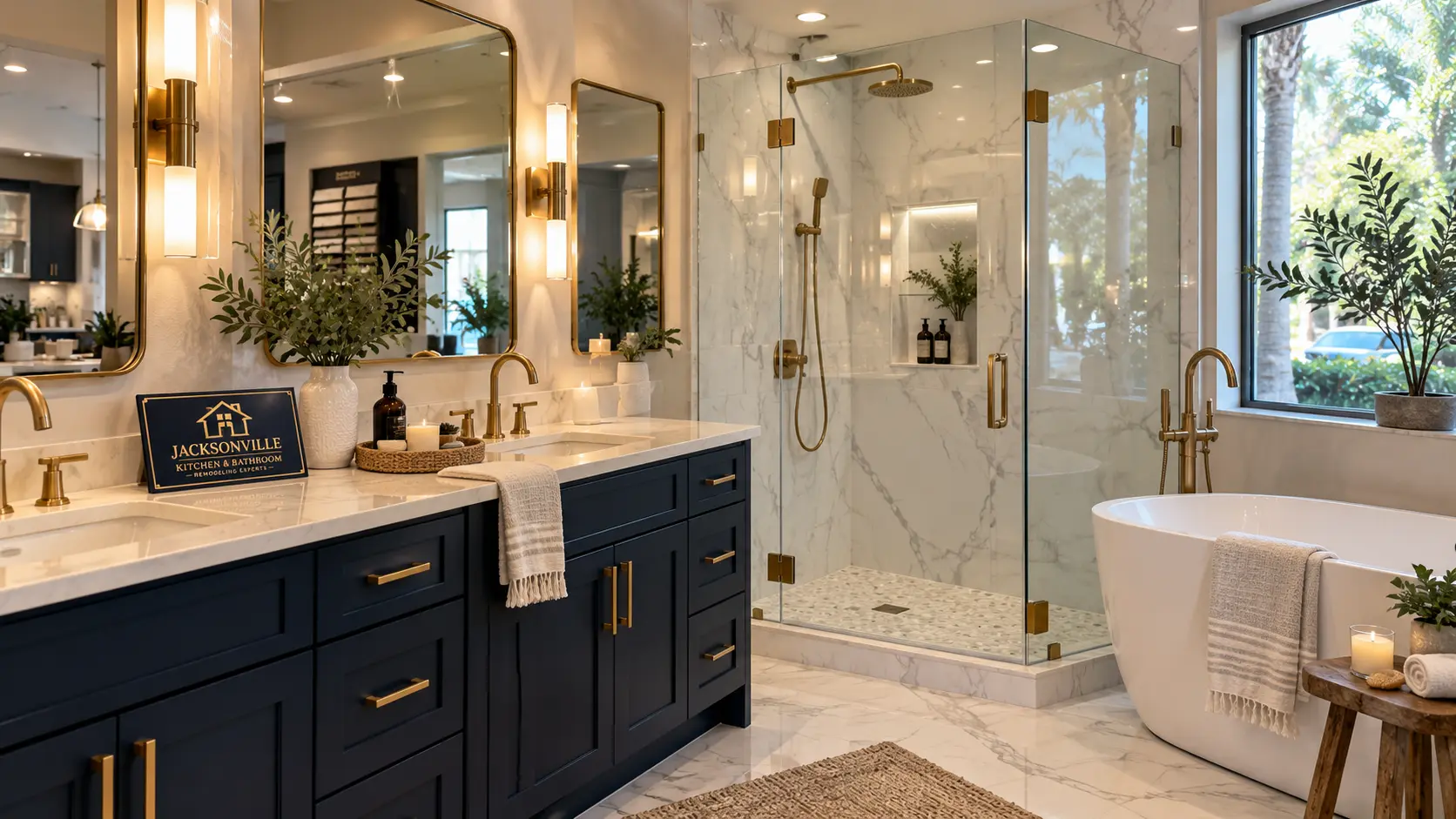
What's Involved in a Conversion
- Removing the tub and surrounding wall surfaces.
- Adjusting the drain location and size for a shower.
- Raising or replacing the shower valve and adding a rain head or handheld.
- Building and waterproofing a new shower pan and walls.
- Tile, niche, optional bench, and glass door or panel.
Curb vs Curb-Free
A low curb is the most common approach in a tub alcove. A curb-free entry is possible in some homes but depends on the floor structure. If accessibility is a goal, mention it early so the drain and floor slope can be planned for it.
Should You Keep a Tub Somewhere?
If the home has another tub, converting the hall or primary bath tub is usually an easy decision. If it's the only tub, think about young children, pets and future buyers. Read the full guide: Tub-to-Shower Conversion in Jacksonville: What Homeowners Should Know.
Related: walk-in shower installation and bathroom remodeling in Jacksonville.
Showers FAQ
Can any bathtub be converted to a shower?
Most standard alcove tubs can. The drain location, floor structure and wall framing determine how simple the conversion is.
Will the shower be the same size as the tub?
Usually the shower uses the tub's footprint. In some layouts it can be enlarged by borrowing space from a closet or adjacent area.
What about ventilation?
Showers produce more steam in a smaller zone. Confirm the exhaust fan is properly sized and vented outside.